

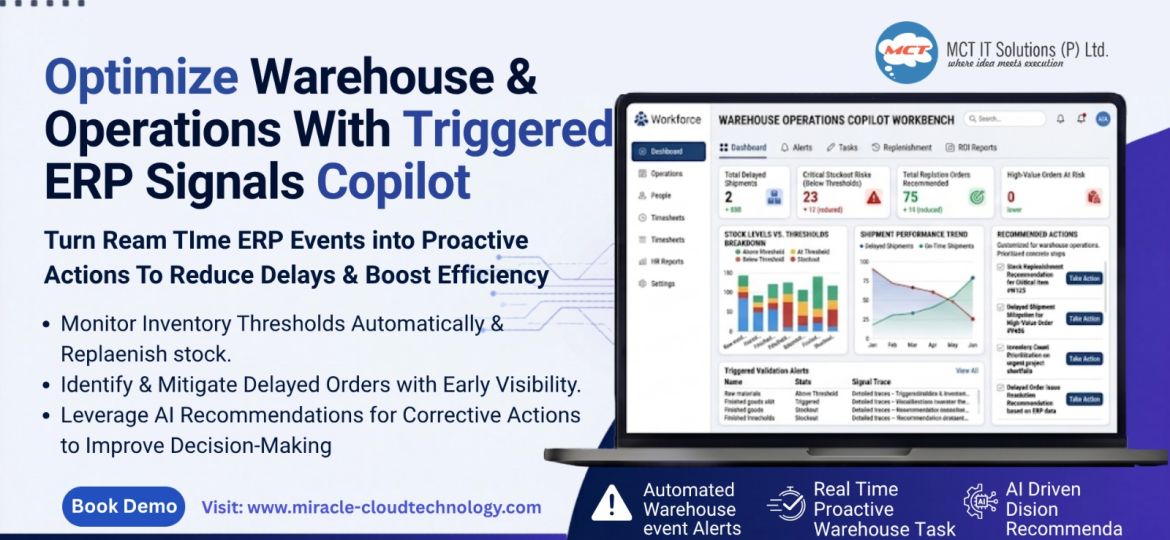
List of Practical Ways to Optimize Warehouse Operations Using Copilot and ERP Signals
Warehouses don’t fail because of a lack of data. They fail because teams react too late.
Stock shortages, delayed shipments, inventory mismatches, and missed replenishment opportunities often happen even when all the information already exists inside an ERP system. The challenge isn’t collecting data—it’s acting on it at the right time.
This is where Triggered ERP Signals Copilot can make a significant difference. Instead of waiting for users to monitor dashboards and reports, businesses can automate alerts, recommendations, and actions based on real-time ERP events.
Why Traditional Warehouse Monitoring Falls Short
Most warehouse teams still rely on periodic reports and manual checks. By the time an issue is identified, it has already impacted operations.
In my experience, warehouse efficiency improves when businesses move from a reactive model to a proactive model, where critical ERP events automatically trigger the next best action.
How to Use Triggered ERP Signals Copilot in 5 Practical Steps
1. Monitor Inventory Thresholds Automatically
Configure the Copilot to detect when stock levels fall below predefined limits.
Instead of waiting for inventory reviews, purchasing teams receive instant recommendations for replenishment.
2. Identify Delayed Orders Early
When shipment dates are at risk, the Copilot can notify warehouse managers before customer commitments are missed.
Early visibility means fewer escalations and happier customers.
3. Prioritize High-Impact Tasks
Not every warehouse alert deserves immediate attention.
Triggered ERP Signals Copilot can help teams focus on urgent inventory shortages, delayed dispatches, and high-value orders first.
4. Reduce Manual Follow-Ups
Many warehouse employees spend valuable time tracking statuses and chasing updates.
Automated ERP signals can generate reminders, alerts, and recommended actions without manual intervention.
5. Improve Decision-Making with AI Recommendations
Instead of simply notifying users about a problem, Copilot can suggest corrective actions based on ERP data, helping teams resolve issues faster.
The Real Value: Acting Faster, Not Working Harder
The biggest benefit of Triggered ERP Signals Copilot isn’t automation alone—it’s reducing the time between identifying a problem and taking action.
Organizations that use ERP signals effectively spend less time searching for information and more time improving operational performance.
Conclusion
Warehouse efficiency is no longer about having more reports; it’s about ensuring the right people receive the right information at the right moment.
Triggered ERP Signals Copilot helps organizations turn ERP events into actionable insights, enabling faster decisions, fewer delays, and more streamlined operations.