

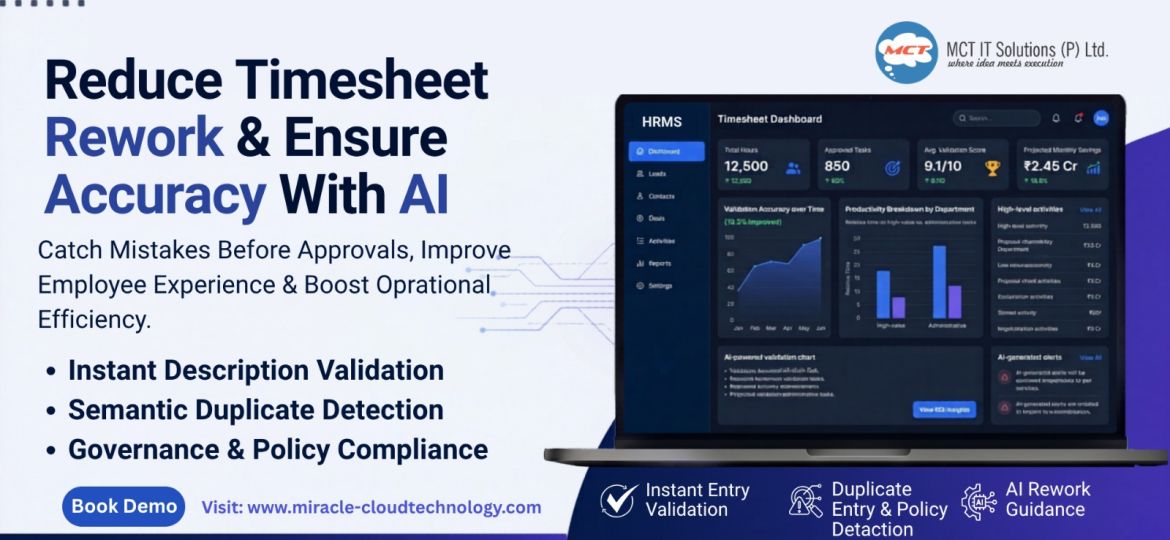
How to Use HRMS AI Timesheet to Reduce Employee Rework and Improve Accuracy
Rework is one of the biggest hidden productivity killers in organizations.
Employees spend hours correcting rejected timesheets, rewriting unclear descriptions, or resubmitting duplicate work entries. It slows down approvals, delays payroll, and creates unnecessary frustration for both employees and managers.
This is where AI makes a real difference.
Instead of waiting for manual feedback after submission, AI can validate timesheet entries instantly, detect issues early, and guide employees before mistakes become rework. In my opinion, this is one of the most practical uses of AI in HRMS because it improves both employee experience and operational efficiency.
If your teams struggle with repetitive corrections, AI-driven timesheet governance can solve it.
Why Rework Happens in Timesheets
Most rework happens because employees don’t know there’s an issue until after submission.
Common reasons include:
- Weak or unclear descriptions
- Duplicate entries
- Incorrect hours logged
- Policy compliance issues
By the time managers reject these entries, employees have to revisit and fix them, wasting valuable time.
How AI Prevents Rework Before It Starts
1. Instant Quality Validation
AI reviews work descriptions as soon as the employee submits them.
It checks if the description is detailed enough, aligned with the task, and follows company standards. This helps employees improve entries before they move forward.
Think of it like a real-time quality coach.
2. Duplicate Detection
One of the most common mistakes in timesheets is duplicate submissions.
AI can compare entries against historical records and identify semantic duplicates, even if the wording is different.
This prevents accidental double-logging and avoids correction cycles later.
3. Rule Compliance Checks
AI validates entries against governance rules like:
- Maximum work hours
- Mandatory fields
- Submission frequency
- Task category alignment
This reduces the chances of policy-based rejection.
Practical Tips to Reduce Rework Faster
Keep Descriptions Clear
Train employees to explain work in simple, meaningful terms.
Use AI Feedback as Guidance
Treat AI validation as support, not correction.
Review Patterns Regularly
Look for repeated rejection reasons and improve team training.
Keep Human Oversight
Managers should still review exceptions where judgment matters.
Conclusion
AI helps employees avoid rework by catching mistakes before they become approval issues.
Instead of fixing rejected entries later, employees can submit cleaner, more accurate timesheets from the start. This improves productivity, reduces frustration, and speeds up the entire approval process.
The real benefit isn’t just faster approvals, it’s better work quality at the source.
🚀 Want to see how AI can reduce timesheet rework in your HRMS? Book a demo and explore smarter timesheet governance in action.
How much time does your team currently spend fixing rejected timesheets?